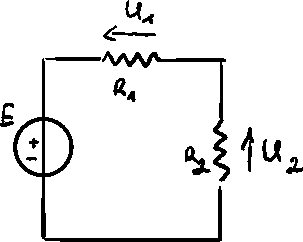
DC Analysis
Important
DC solution to a circuit is a solution consisting entirely of constant signals
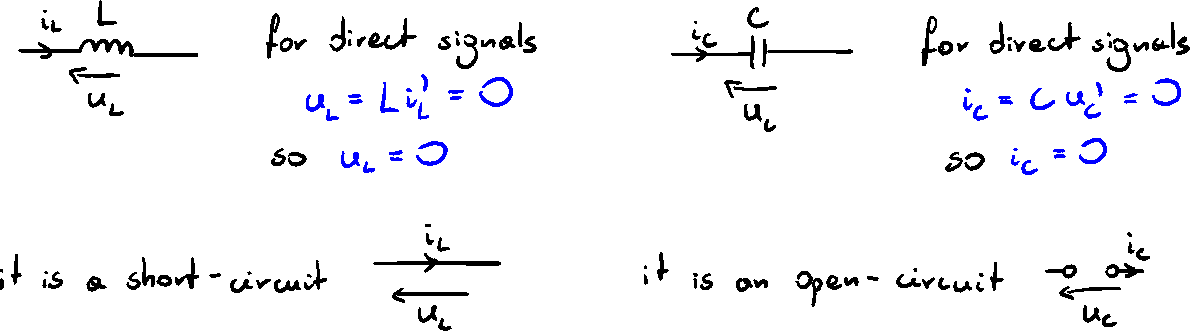
Methods of solving
Kirchoff Laws
Device equations
Nodal method
- Label all nodes denoting electric potentials
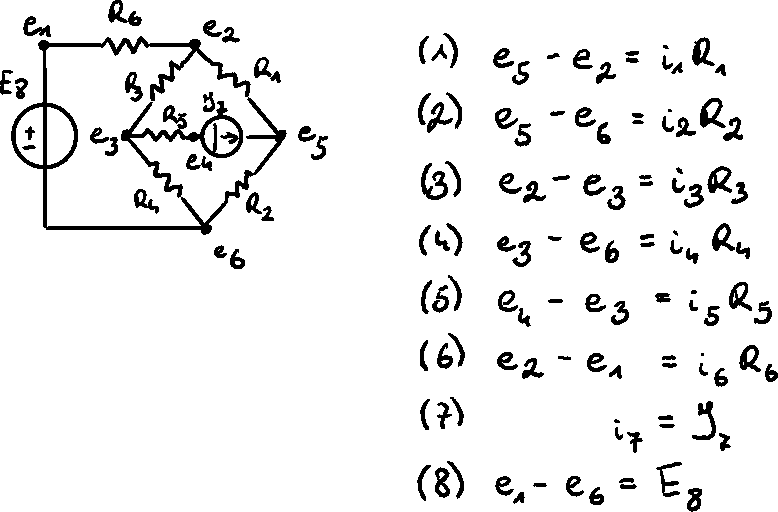
- Label all currents flowing into the elements
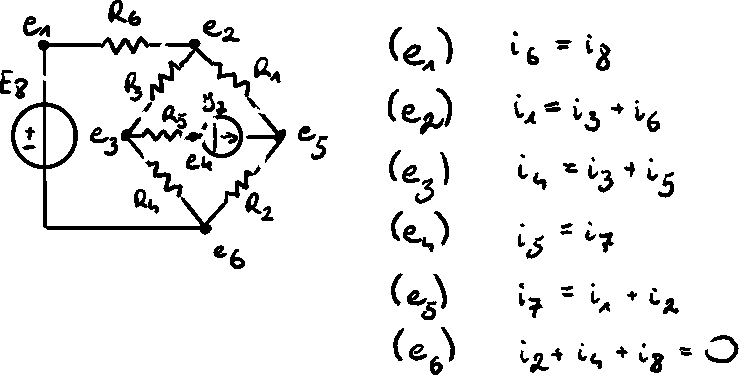
- Solving, we can find that
so we can redraw the circuit like so
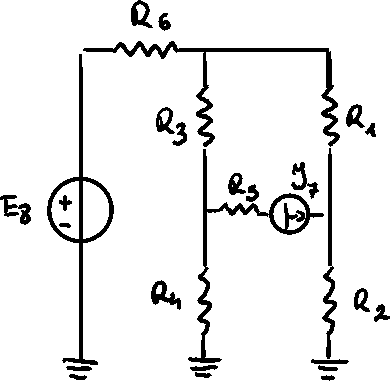
Which is extremely easy to solve
Superposition rule
Important
A solution to a linear circuit with
Voltage source becomes short-circuit,current source becomes open-circuit

Example
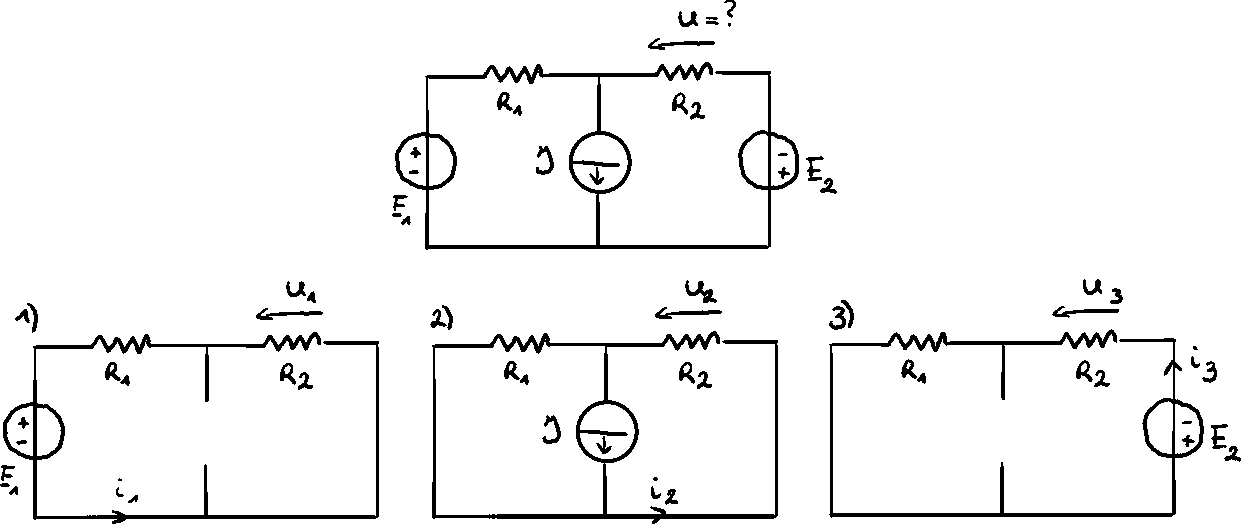
Solving by inspection
- Introduce unknown variables
- Determine number of voltages and currents by KVL, KCL and device equations
- Setup equations from KCL, KVL and device equations
- If number of equations is too low, repeat from step 1
- Solve
Current Divider Formula (CDF)
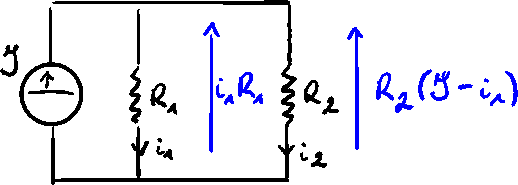
Voltage Divider Formula (VDF)