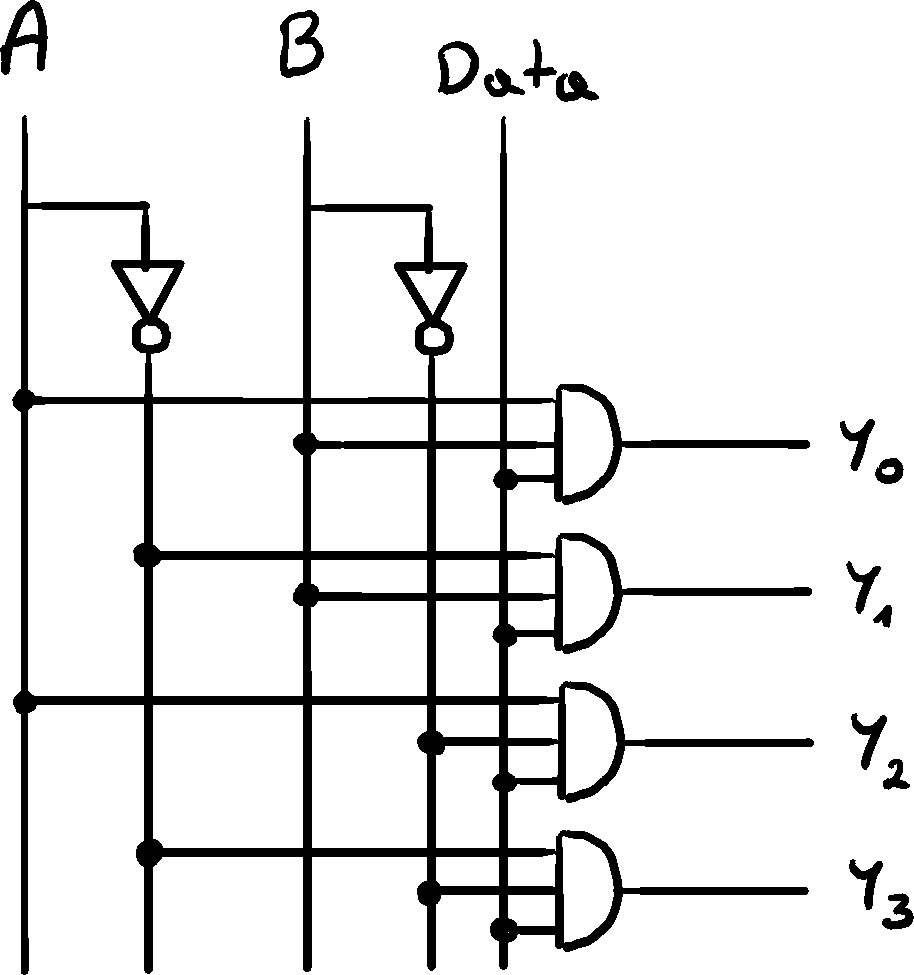
Combinatorial Logic
Multiplexers
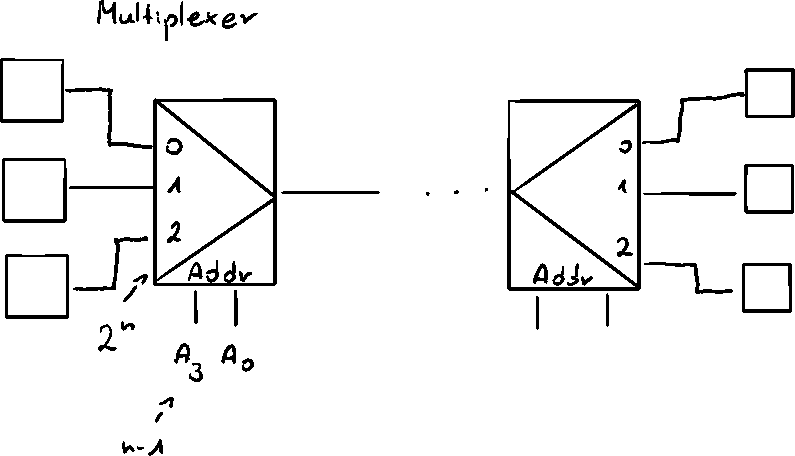
MUX2
Let
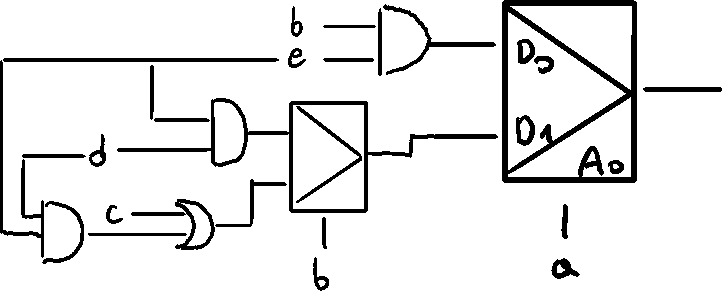
For
iterative circuits, multiplexers
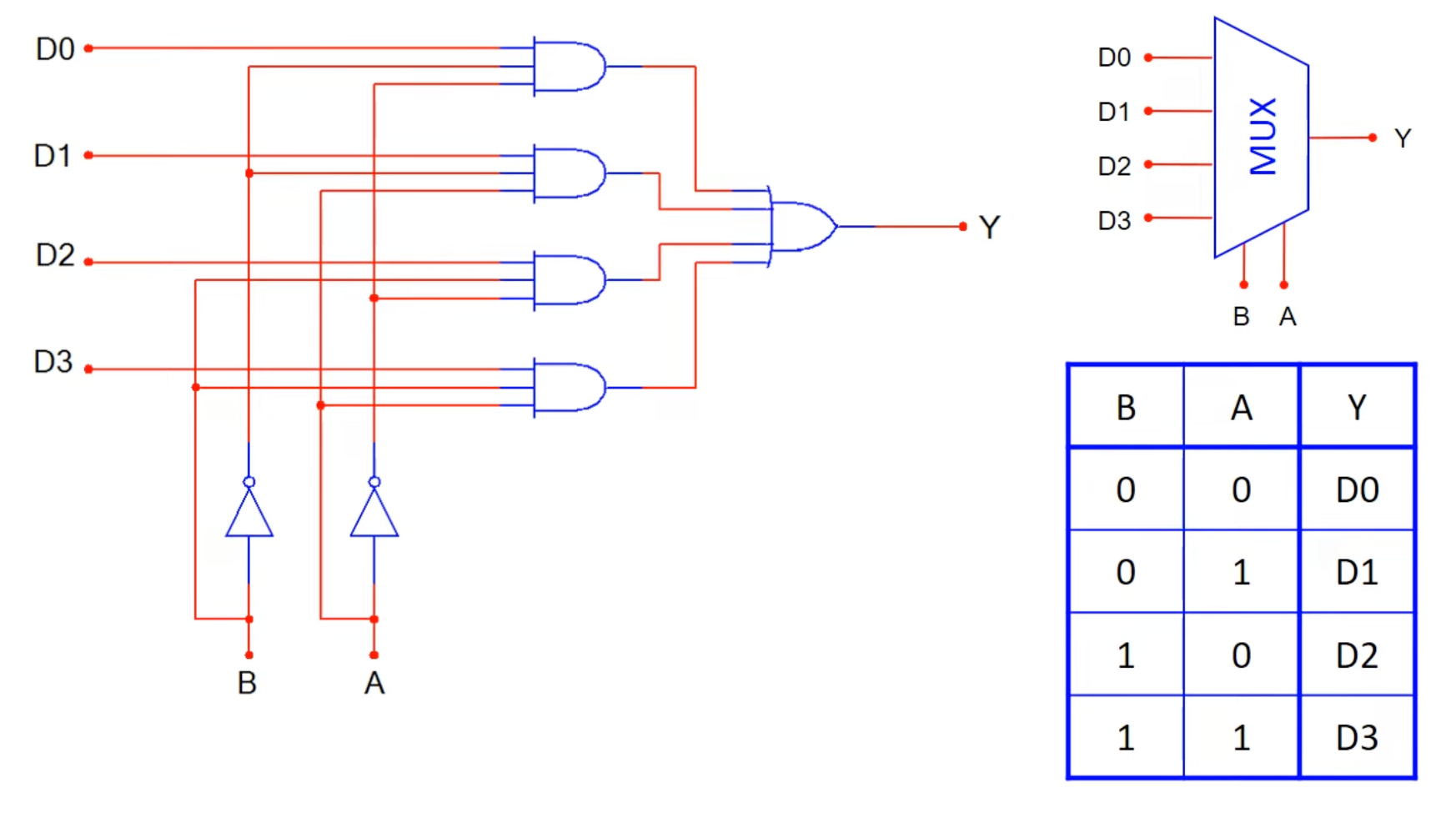
We can convert it into a MUX4
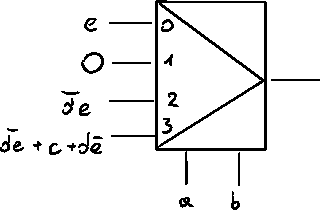
MUX3
let
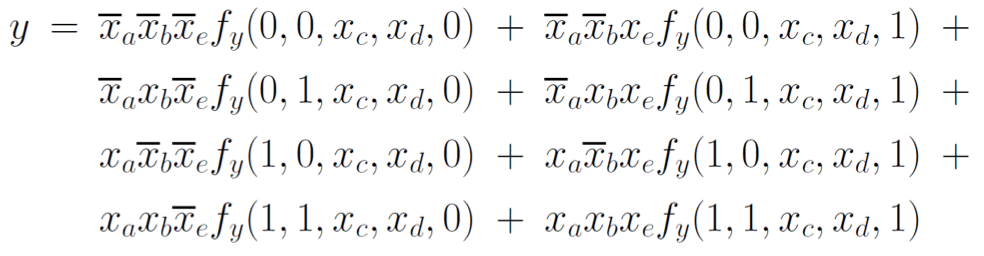
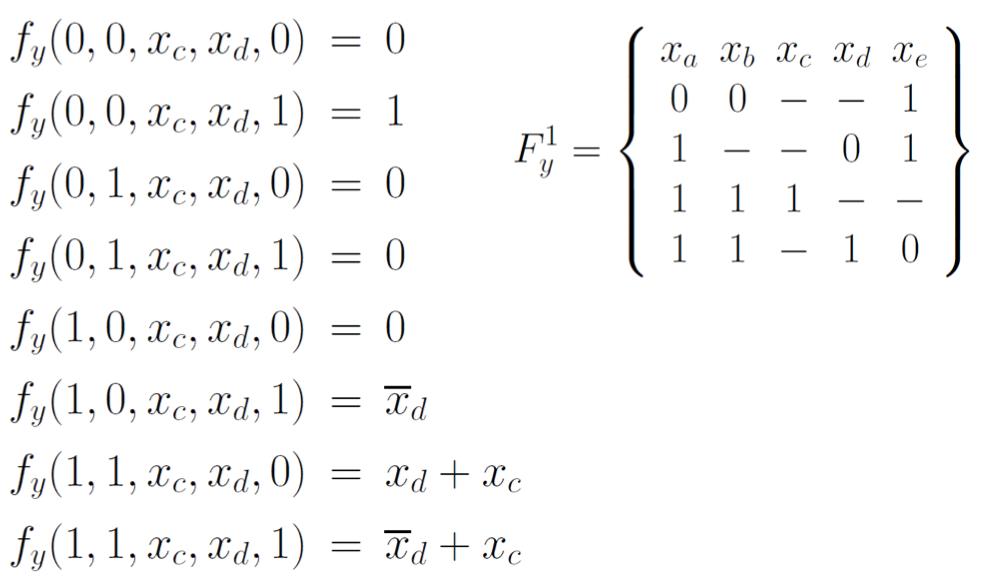
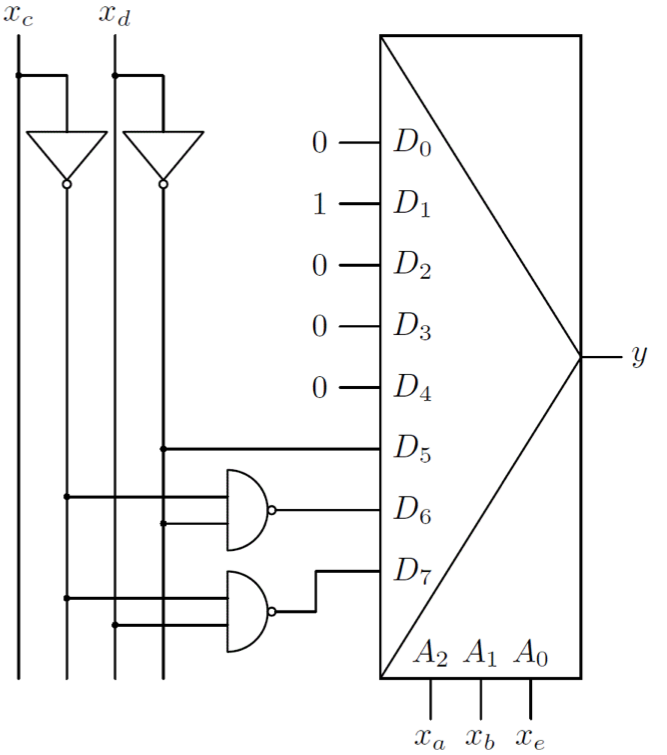
This can be turned into this circuit
MUX4
Example 1
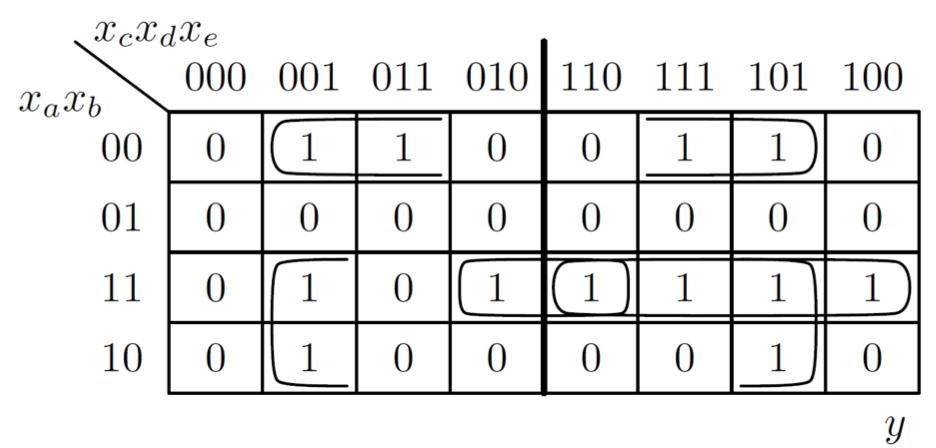
this turned into
and shown as
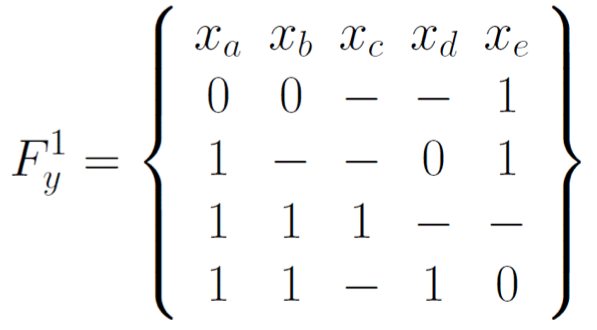
Now we choose
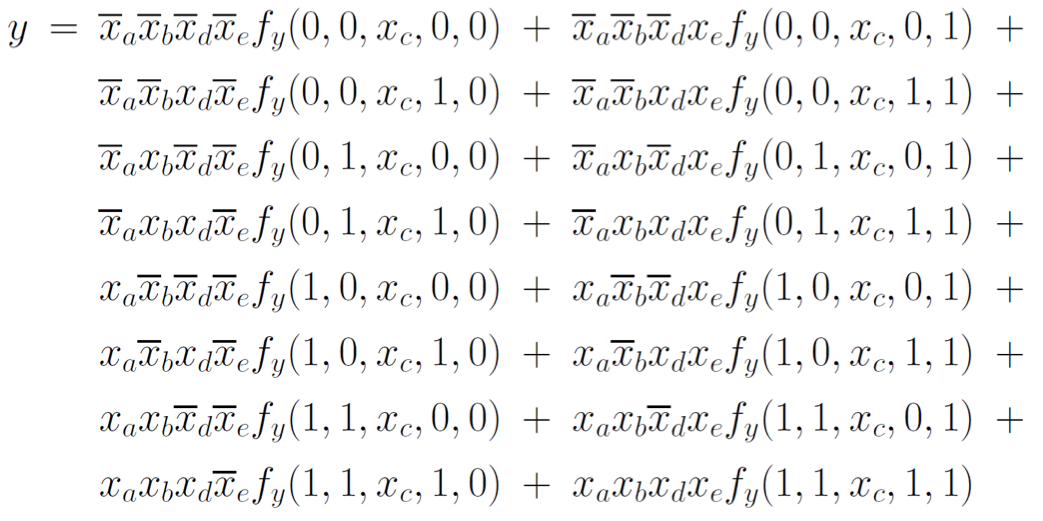
Example 2
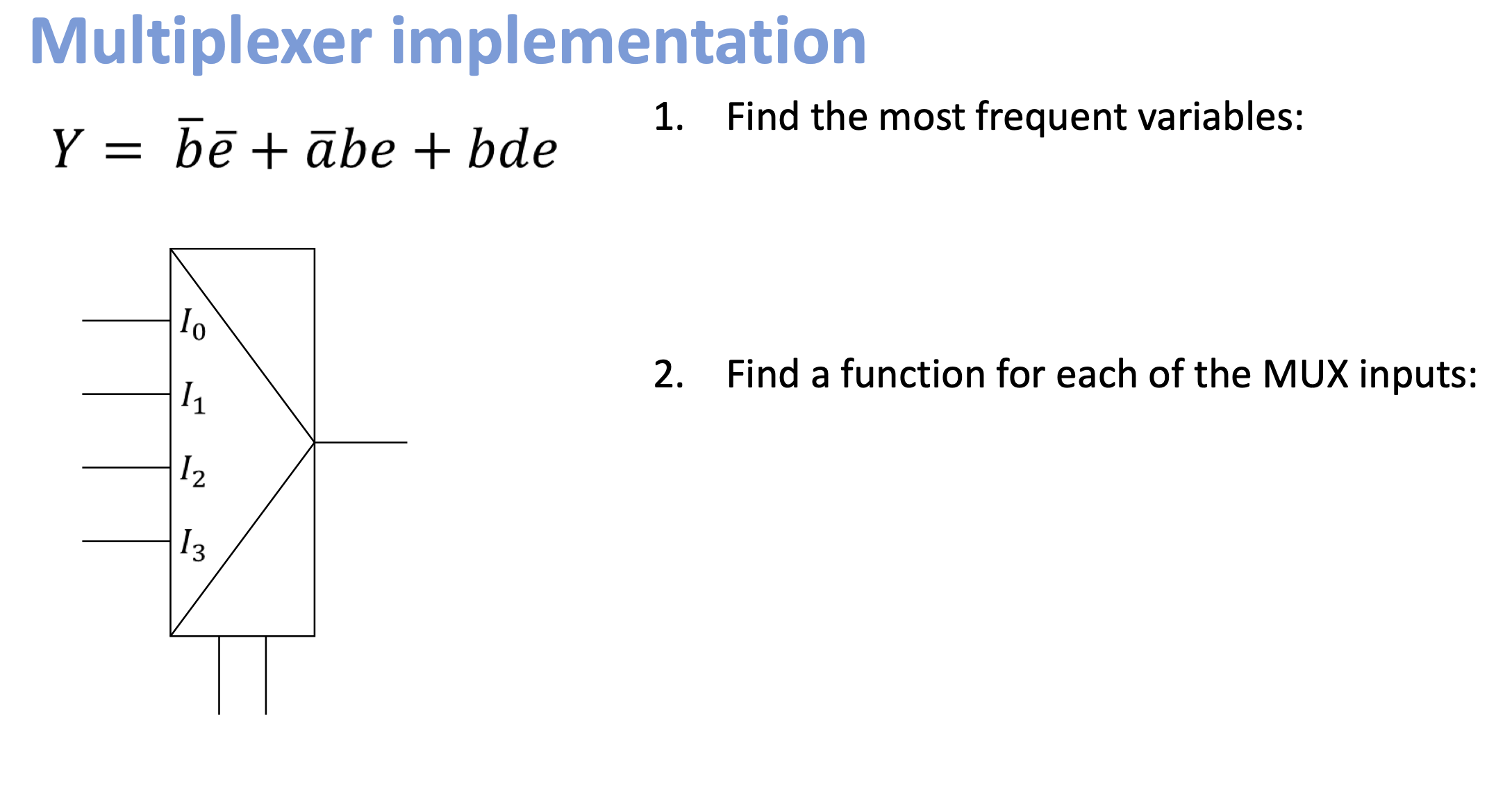
Most frequent variables
b and e are most frequent, as they appear in every Y product
This means, we can use those inputs as select lines (addr. input)
Function for each MUX input
Decomposition
MUX decomposition is process of implementing a Boolean func for MUX
Choose some variables as MUX select lines and express function's output as function of those selections
Example
Truth table
| A | B | C | f |
|---|---|---|---|
| 0 | 0 | 0 | 0 |
| 0 | 0 | 1 | 1 |
| 0 | 1 | 0 | 1 |
| 0 | 1 | 1 | 0 |
| 1 | 0 | 0 | 0 |
| 1 | 0 | 1 | 1 |
| 1 | 1 | 0 | 1 |
| 1 | 1 | 1 | 1 |
For each combined
| AB | MUX input | f(C) |
|---|---|---|
| 00 | D0 | C |
| 01 | D1 | C' |
| 10 | D2 | C |
| 11 | D3 | 1 |
| So |
Hierarchical decomposition
Large MUX can be recursively decomposed into smaller MUXes
16:1 MUX can be build from four 4:1 MUXes and one 4:1 MUX to select among them
Any boolean func can be ultimately implemented only with 2:1 MUXes
Demultiplexer