4.6 - Continuous Random Variables

Probability = area under probability density curve
Probability density curves are:

P(a<x<b)=P(a≤x≤b)=P(a<x≤b)=P(a≤x<b)
Example Curves

Pasted image 20260324120724.png
For all values between a and b the probability densities are the same
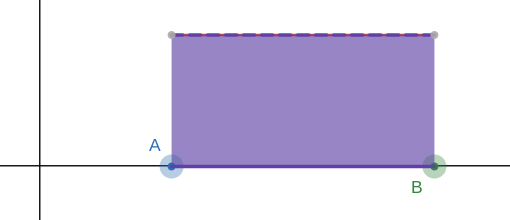
Uniform c.r.v

Area=1=length×height1=(B−A)×heightheigth=1B−A

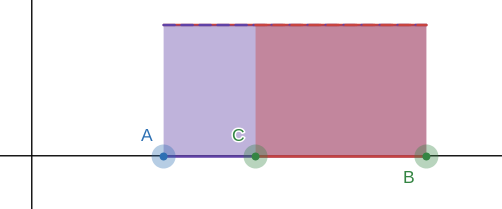
So to find a probability of event P(U>C)
Pasted image 20260324121500.png
We can do

P(U>C)=height×(C−B)=1B−A×(C−B)

Pasted image 20260324122249.png

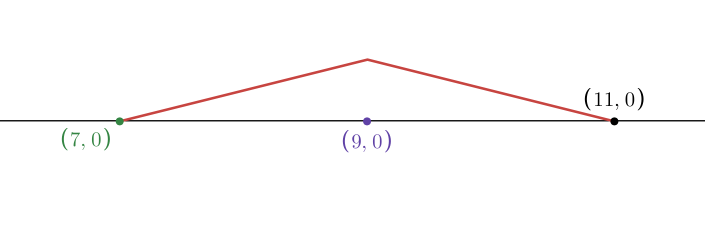
1=12×(11−7)×hh=12

μ=4+72=5.5

Pasted image 20260324123542.png
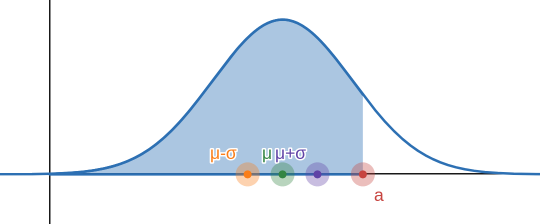
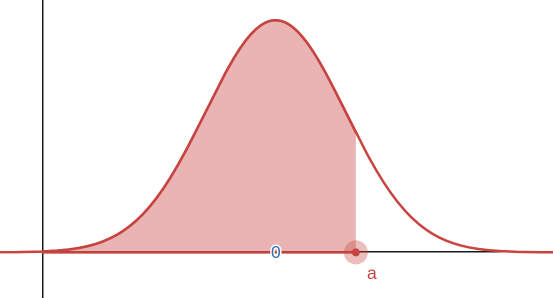
if we convert it into a z distribution
Pasted image 20260324123821.png
μ=0
σ=1
P(z<P)=norm.s.dist(P,1)
P(X<a)=blue area=norm.dist(a,μ,σ,1)=red area=norm.s.dist(a′,1)